

 English
Stand Up for Healthy Aging
“Help! I’ve fallen and I can’t get up!” Do you remember that 1990s TV commercial for a medical alert device? It was a great ad because it was so relatable. Although we do our best to avoid falling in our older years, 1 in 2 people over the age of 80 will fall.[1] Furthermore, almost half of these people who fall are uninjured but despite this, they’re not able to stand up on their own again. The longer they remain on the ground waiting for help, the worse their outcome will be.[2]
There can be a number of health reasons why an uninjured senior can’t get back up. Two common and preventable causes are due to muscle loss and weak joints. This is something we can all work on—keeping ourselves strong and fit so that we enter our golden years in good shape.
So, Where Should We Start?
One of the most effective starting points is surprisingly simple: practicing the sit-to-stand movement. Repeatedly sitting and standing is commonly used to help evaluate fall risk and is also an accessible exercise that supports strength, balance, and fall prevention.
To take the sit-to-stand test, find a chair with a 17-inch-high seat. Set a timer for 30 seconds, sit on the chair, hands on opposite shoulders, and stand. In my age group—women 60 to 65 years old—scoring less than 12 stands in 30 seconds means an increased risk of falling.[3] Thankfully, I scored 17. When I’m 80 years old, I’ll need to be able to stand up at least nine times during the same interval, so, I better keep practicing.
From Lying on the Floor to Standing
The next test involves lying down on the floor and then simply standing up. The gold standard is standing without using a knee, hand, or something to pull yourself up with. The test starts at 5 points, and you lose a point every time you need more than your feet to get up. I scored 4 because I used my knee. The lowest scores in this test were associated with the highest overall mortality.[4] In other words, the people who needed to use the highest number of body parts to haul themselves to their feet had the greatest risk of death.
These tests may not be possible if you have a knee or hip injury. Some medical conditions may also make it hazardous for you to try this test. If you have been told not to get down on the floor by a health-care practitioner, then please don’t try it.

Stronger Muscles for a Longer Life
A higher muscle mass in older people is associated with longevity.[5] It’s imperative that we stay physically strong. In fact, a lack of muscle mass seems to be a more significant factor for mortality than obesity. This means that being sedentary is more likely to shorten your life than being overweight.[6] Walk with a friend. Dance. Play pickleball. Join a hiking group or exercise class. Take “movement snacks” throughout the day. You can find several easy exercise suggestions at the University of Calgary’s website Just One Move at justonemove.ca. There are plenty of videos showing the exercises performed by real people with arthritis. The message here is that staying strong will prolong your life.
Managing Pain and Inflammation
What happens if it hurts to move? Inactivity due to pain can limit many people from moving. I have inflammatory arthritis. I don’t like to use anti-inflammatory over-the-counter medication because regular use of these medications can cause side effects such as stomach and liver issues.[7]
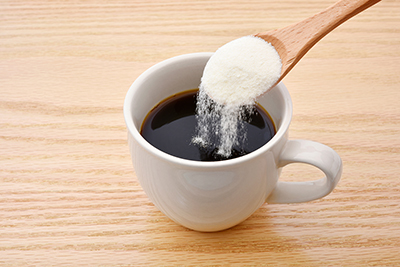
Instead, I put a couple of scoops of collagen in my coffee every day, which helps with the pain and joint function. Collagen is a protein found naturally in the body that keeps joints healthy,[8] and it has been well-studied both for osteoarthritis and inflammatory arthritis.[9] It dissolves instantly and has no flavour. In fact, I use it as a creamer in my coffee!
Another supplement you might wish to try is methylsulfonylmethane (MSM), which has been researched for its benefits in joint-pain management.[10], [11] As a beneficial side effect, it may also reduce wrinkles on your face.[12]
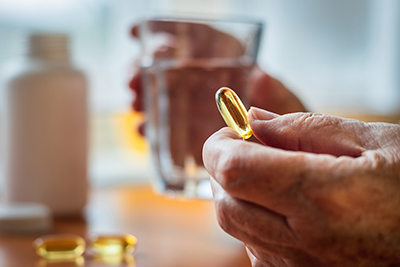
I also supplement with omega‑3 fatty acids, daily. These are derived from fish or plant sources, and they have many functions in the body, including reducing inflammation. The main food sources for omega‑3s are flax, hemp seeds, cold-water fatty fish, and leafy greens; however, I find that supplements offer an easier, more convenient way to support intake. Omega‑3s are also great for skin health and combating hair dryness.[13]
Cooking with turmeric and eating pineapples are two more natural anti-inflammatories to consider. A more pronounced effect can be found by taking curcumin or bromelain supplements, which are derived from these foods.[14], [15]
Another favourite of mine, for muscle soreness, is ginger. I use the raw root in smoothies, but I like to keep the powdered capsules around for quick pain relief too. They’re convenient because they can be opened up and made into instant ginger tea. Add a little honey and the drink becomes one of the best things to help deal with cold symptoms too.[16]
As always, before adding a new supplement to your diet, check with your health-care practitioner to be sure it isn’t contraindicated by your medical issue or medications.
With the pain under control, and a plan in mind, we can keep those muscles and joints strong and healthy. If I fall down at 85 and my medical alert device asks: “Do you need help?” I want to reply, confidently: “No, thanks, I’m up now and I’m fine.” Wouldn’t you want to do the same?

Wendy Presant, RHNC, CFMP
A former registered nurse and a retired naturopathic doctor with credentials in health and life coaching, Wendy is passionate about helping people over the age of 40 optimize their continuing journey through life. She enjoys writing and is the recent author of Dry—A Holistic Guide to Sjögren’s Disease.
dryhelp.ca · wendy.happyaging@gmail.com
References
[1] E. Burton, K.D. Hill, P. Davey, Y.L. Ng, and S.A. Williams. “The biomechanics of healthy older adults rising from the floor independently.” International Journal of Environmental Research and Public Health 20, no. 4 (2023): 3507.
[2] M.E. Tinetti, W.L. Liu, and E.B. Claus. “Predictors and prognosis of inability to get up after falls among elderly persons.” JAMA 269, no. 1 (1993): 65–70.
[3] [No author listed.] Assessment: 30-Second Chair Stand. Centers for Disease Control and Prevention, 2017. Available from https://www.cdc.gov/steadi/media/pdfs/STEADI-Assessment-30Sec-508.pdf
[4] L.B.B. de Brito, D.R. Ricardo, D.S.M.S. de Araújo, P.S. Ramos, J. Myers, and C.G.S. de Araújo. “Ability to sit and rise from the floor as a predictor of all-cause mortality.” European Journal of Preventive Cardiology 21, no. 7 (2014): 892–898.
[5] P. Srikanthan and A.S. Karlamangla. “Muscle mass index as a predictor of longevity in older adults.” The American Journal of Medicine 127, no. 6 (2014): 547–553.
[6] C.P. Lambert. “Strength as a predictor of longevity: Compelling evidence.” Journal of Men’s Health 18, no. 5 (2022): 113.
[7] [No author listed.] “How often can you take ibuprofen?” Cleveland Clinic. 2026‑04‑03. https://health.clevelandclinic.org/is-it-bad-to-take-ibuprofen-every-day
[8] H. Luzardo. “Health benefits of collagen.” Nourish by WebMD. [No date given.] https://www.webmd.com/diet/collagen-health-benefits
[9] D. Martínez‑Puig, E. Costa‑Larrión, N. Rubio‑Rodríguez, and P. Gálvez‑Martín. “Collagen supplementation for joint health: The link between composition and scientific knowledge.” Nutrients 15, no. 6 (2023): 1332.
[10] G. Xu, T. Zhou, Y. Gu, Q. Wang, M. Shariff, P. Gu, T. Nguyen, R. Shi, and J. Rao. “Evaluation of the effect of Mega MSM on improving joint function in populations experiencing joint degeneration.” International Journal of Biomedical Science 11, no. 2 (2015): 54–60.
[11] A. Toguchi, N. Noguchi, T. Kanno, and A. Yamada. “Methylsulfonylmethane improves knee quality of life in participants with mild knee pain: A randomized, double-blind, placebo-controlled trial.” Nutrients 15, no. 13 (2023): 2995.
[12] N. Muizzuddin and R. Benjamin. “Beauty from within: Oral administration of a sulfur-containing supplement methylsulfonylmethane improves signs of skin ageing.” International Journal for Vitamin and Nutrition Research 92, no. 3–4 (2022): 182–191.
[13] D. Fernández‑Lázaro, S. Arribalzaga, E. Gutiérrez‑Abejón, M.A. Azarbayjani, J. Mielgo‑Ayuso, and E. Roche. “Omega‑3 fatty acid supplementation on post-exercise inflammation, muscle damage, oxidative response, and sports performance in physically healthy adults—A systematic review of randomized controlled trials.” Nutrients 16, no. 13 (2024): 2044.
[14] L. Zeng, T. Yang, K. Yang, G. Yu, J. Li, W. Xiang, and H. Chen. “Efficacy and safety of curcumin and Curcuma longa extract in the treatment of arthritis: A systematic review and meta-analysis of randomized controlled trial.” Frontiers in Immunology 13 (2022): 891822.
[15] U. Kansakar, V. Trimarco, M.V. Manzi, E. Cervi, P. Mone, and G. Santulli. “Exploring the therapeutic potential of bromelain: Applications, benefits, and mechanisms.” Nutrients 16, no. 13 (2024): 2060.
[16] F. Ayustaningwarno, G. Anjani, A.M. Ayu, and V. Fogliano. “A critical review of ginger’s (Zingiber officinale) antioxidant, anti-inflammatory, and immunomodulatory activities.” Frontiers in Nutrition 11 (2024): 1364836.